Rosa Flores · 1 October 2026
Unpacking the Mechanics of Content Moderation in Niche Web Communities
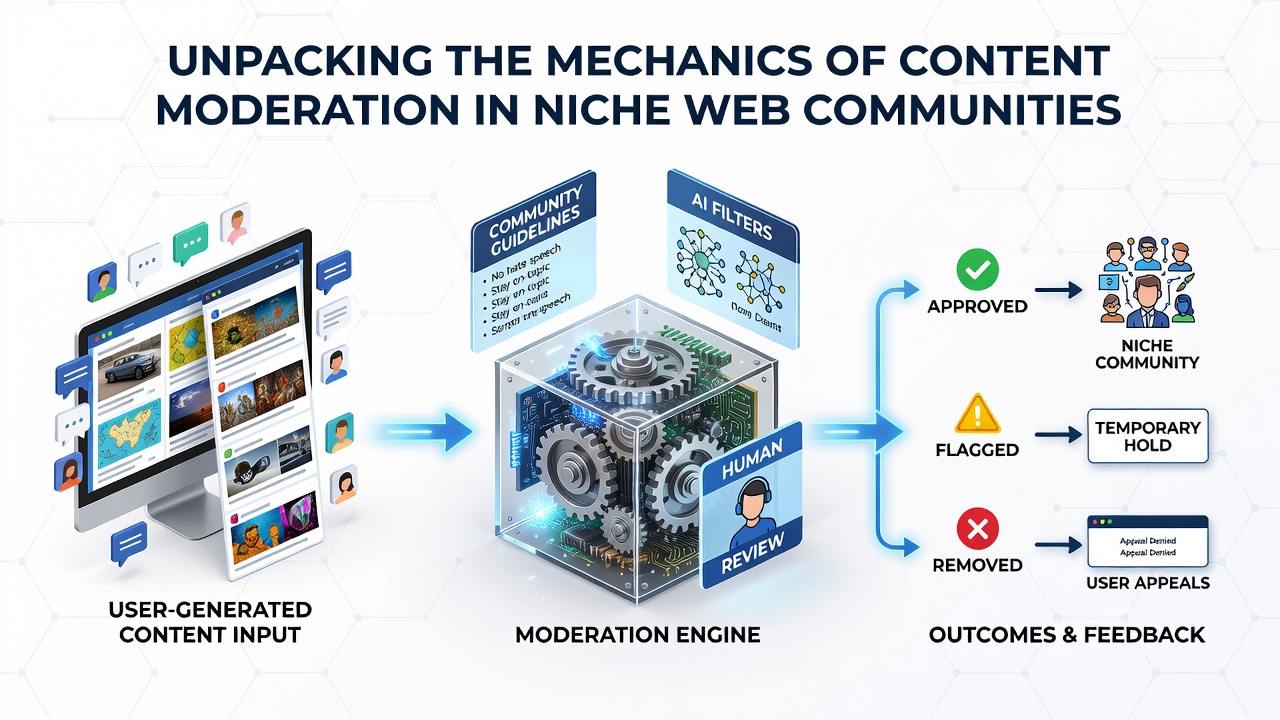
Content moderation in niche web communities operates through layered systems that combine automated tools with human oversight, and these mechanisms adapt to the scale and focus of specialized groups such as hobbyist forums, private Discord servers, and topic-specific subreddits. Researchers at various institutions have documented how smaller platforms rely heavily on volunteer moderators who enforce community guidelines while automated systems scan for prohibited keywords, image hashes, and behavioral patterns that signal spam or abuse.
Core Components of Moderation Systems
Automated detection forms the first line of defense in most niche spaces, where algorithms flag posts containing hate speech, copyrighted material, or explicit content before they reach wider visibility, yet these tools often require calibration because niche terminology can trigger false positives in communities discussing technical topics or cultural references. Human moderators then review flagged items, applying context that machines miss, and data from platform reports shows that volunteer teams in hobbyist groups handle thousands of decisions monthly while balancing participation with enforcement duties.
Community guidelines serve as the foundation for these decisions, and they typically outline rules against harassment, off-topic promotion, and misinformation tailored to the group's purpose, whereas larger platforms publish standardized policies that smaller communities customize through internal voting or founder directives. Observers note that this customization allows groups focused on sensitive subjects like mental health support or political discussion to set stricter boundaries than general interest forums.
Challenges Unique to Smaller Platforms
Scale presents persistent difficulties because niche communities often lack the resources for round-the-clock staffing, which leads moderators to implement tiered response times where urgent reports receive immediate attention and routine flags queue for daily review, and studies from academic sources indicate that burnout rates among volunteer teams rise when platforms experience sudden growth spikes. Legal requirements add another layer, with frameworks such as the European Union's Digital Services Act requiring transparency reports on removal decisions that affect EU users, while platforms based elsewhere must still comply if they serve those audiences.

Appeals processes vary widely across these spaces, with some communities allowing users to contest removals through public threads while others keep decisions private to protect moderator identities, and evidence from regulatory filings reveals that successful appeals often hinge on additional context provided after initial flags. In October 2026, updates to transparency obligations under multiple international agreements are scheduled to require more detailed disclosure of moderation criteria, which will affect how niche operators document their processes.
Regional Regulatory Influences
Different jurisdictions impose distinct obligations that niche platforms must navigate when users cross borders, for instance the Australian eSafety Commissioner enforces rapid removal standards for certain harmful content while Canadian regulations emphasize user reporting mechanisms and data retention limits. Industry reports from organizations such as the Internet Society highlight how these overlapping rules create compliance burdens that smaller teams address through shared resources or third-party moderation services rather than building internal capabilities from scratch.
Training for moderators in these environments frequently draws from peer networks and open resources, where experienced administrators share templates for policy documents and escalation protocols, and data indicates that communities adopting structured training see fewer repeat violations over time. Yet the reality remains that enforcement consistency depends on clear communication between moderators and active members who understand the group's norms.
Conclusion
Mechanics of content moderation in niche web communities continue to evolve through the interplay of technology, volunteer labor, and regulatory pressures that differ by region and platform size. Platforms that document their approaches and adapt tools to specific contexts maintain operations while meeting external expectations, and ongoing developments through 2026 will likely standardize certain reporting practices across borders. Those who study these systems observe that effective moderation ultimately rests on clear rules, consistent application, and mechanisms that allow communities to refine their standards as membership and external conditions shift.