Rosa Flores · 29 October 2026
The Evolution of Trust Mechanisms Among Users in Peer-Regulated Online Spaces
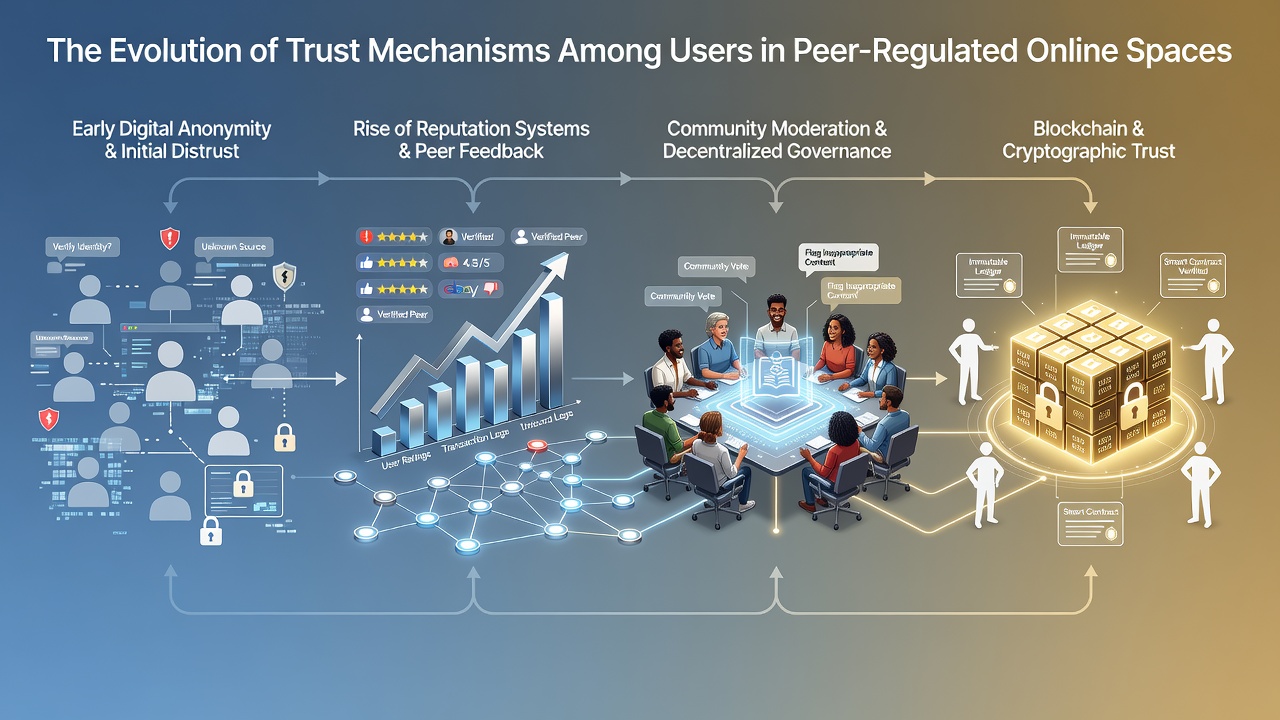
Peer-regulated online spaces began with basic structures in the 1980s and 1990s when users on bulletin board systems and Usenet groups relied on manual verification through repeated interactions and shared knowledge of technical protocols to establish credibility among participants. Those early mechanisms depended on direct communication and community memory because centralized authorities rarely existed in those environments and individuals built trust through consistent contributions over time while disputes were resolved through group consensus rather than formal rules.
Early Foundations in Decentralized Forums
By the late 1990s and early 2000s platforms such as Slashdot introduced automated reputation systems where users earned karma points based on peer ratings of comments and submissions and this approach allowed communities to surface high-quality content without constant intervention from administrators. Researchers documented how these systems reduced spam and low-effort posts because participants learned to value accounts with established histories while new users faced initial skepticism until they demonstrated reliability through multiple interactions. Data from that period shows participation rates increased when visible metrics rewarded positive behavior and penalized repeated violations of group norms.
Similar patterns emerged on sites like eBay and early Wikipedia where feedback loops and edit histories created transparent records that other users could review before engaging in transactions or collaborative edits. Observers noted that these tools scaled trust across larger groups because individuals no longer needed personal familiarity with every participant and instead could reference aggregated data from past exchanges or revisions.
Expansion Through Voting and Moderation Systems
Reddit and similar aggregation platforms refined these ideas in the 2010s by combining upvote and downvote mechanics with subreddit-specific rules enforced by volunteer moderators who themselves gained authority through community elections or demonstrated expertise. Studies from academic institutions revealed that such hybrid models maintained engagement levels when users perceived the process as fair and transparent although breakdowns occurred when moderation teams appeared inconsistent or captured by subgroups. Figures from platform reports indicate that spaces with layered trust signals such as account age combined with contribution scores experienced lower rates of coordinated abuse compared to those relying solely on manual reports.
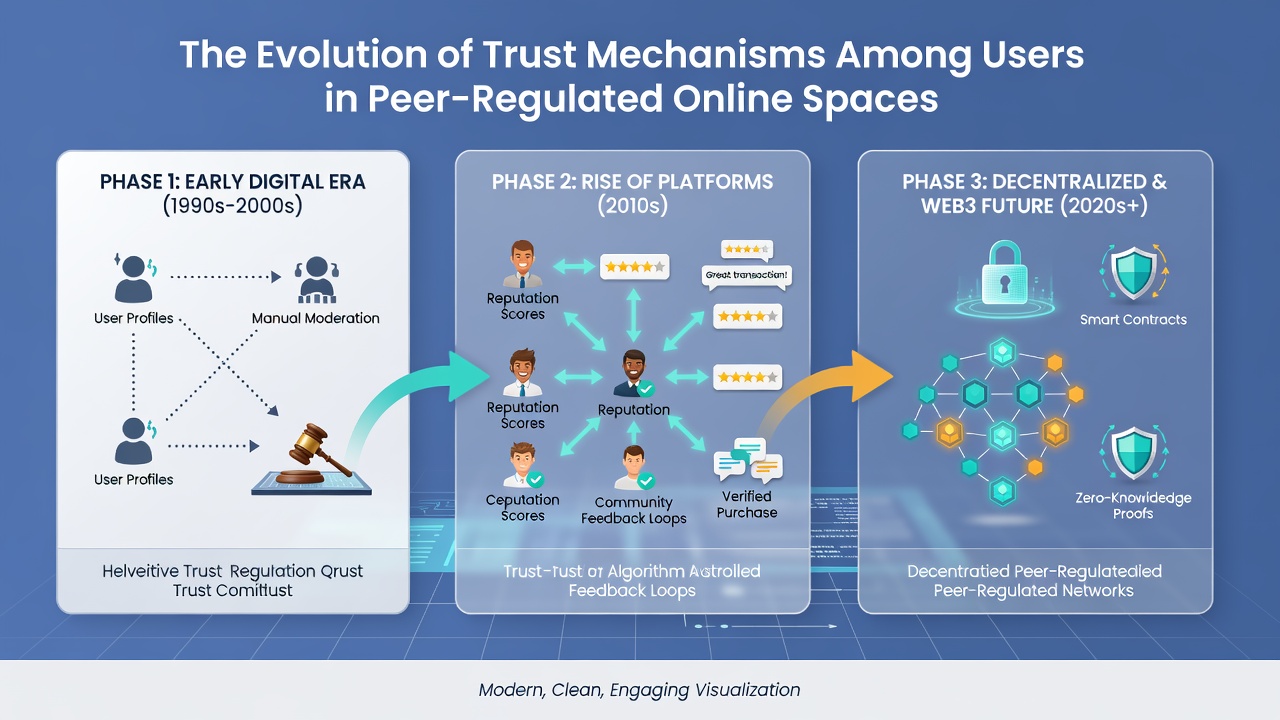
Decentralized alternatives gained traction after 2015 when Mastodon instances and other federated networks adopted local moderation combined with instance-level blocking lists that allowed each community to set its own standards while still participating in a broader network. People who managed these servers often published public logs of decisions which increased accountability and reduced accusations of hidden bias according to analyses published by research organizations. In October 2026 several federated platforms reported continued growth in active users after implementing cross-instance reputation sharing protocols that let moderators quickly identify accounts with histories of violations elsewhere in the network.
Integration of Blockchain and Algorithmic Tools
Blockchain-based systems entered peer-regulated spaces around 2018 through projects that tokenized reputation and governance rights so participants could stake digital assets to signal commitment or vote on rule changes. Reports from industry groups such as the World Economic Forum documented how these mechanisms reduced certain types of gaming because economic costs attached to actions made repeated bad behavior expensive. Yet researchers at various universities found that token concentration sometimes recreated power imbalances when early adopters accumulated disproportionate influence over subsequent decisions.
More recent developments include machine learning models trained on community feedback to flag potential violations before they spread and these tools operate alongside human moderators rather than replacing them. A Pew Research Center analysis of online group dynamics showed that hybrid human-algorithm approaches maintained higher retention rates in large communities because users retained final say over contentious cases while routine tasks received faster processing. As of October 2026 several major decentralized autonomous organizations have adopted similar layered verification that combines on-chain voting records with off-chain reputation checks drawn from multiple platforms.
Conclusion
Trust mechanisms in peer-regulated online spaces have progressed from informal reputation built through direct contact to sophisticated combinations of voting data, moderator oversight, and cryptographic verification that operate across federated and blockchain environments. Each stage addressed specific scaling challenges while introducing new considerations around transparency and power distribution that communities continue to refine through iterative adjustments.